Showing posts with label JAPAN. Show all posts

20.6.12

Out Of The Shadows

After its official presentation at Museum der Kulturen during Art Basel last week, Hiroshi Sugimoto's latest collaboration with the French luxury house of Hermès is now available in stores and the design and production process of the twenty-strong silk scarf collection by the Japanese photographer can be viewed online at its dedicated Hermès Editeur homepage. As I previously reported earlier in the year (Silk SnapsMarch 2012) the limited edition ink-jet prints measuring fifty-five inches square have been inspired by Sugimoto's Color of Shadow (Couleurs de l'Ombre) series - based on luminous Polaroid colour gradations, this makes for yet another exciting addition to the luxury house's expanding artistic portfolio after Josef Albers and Daniel Buren whose collaborations may also be viewed online.
Below is an insight to the collaboration from drawing board to production line of the exclusive one hundred and forty art cum fashion works: each scarf colourway consists of an edition of seven, individually numbered by hand by the artist and priced at $7000.00 - an investment at a snap for both collector and connoisseur alike.  
Hiroshi Sugimoto at Hermès
Couleurs de l'Ombre will tour after Art Basel and is due to land in Brussels at La Verrière in September with further cities scheduled before the end of the year - for more details visit Hermès Editeur.
Images courtesy of Hermès

29.3.12

Silk Snaps

Following in the footsteps of Josef Albers and Daniel Buren (Souvenirs For All Seasons, December 2010) Japanese photographer Hiroshi Sugimoto makes his mark on silk - a material synonymous with none other than French luxury house, Hermès. The limited edition large format print measuring fifty-five inches square will be inspired by the photographer’s Color of Shadow series with a selection of twenty Polaroid colour gradations that will be printed by ink-jet - a similar process adopted by Buren for his collaboration - on one hundred and forty silk twill scarves. The limited edition series will consist of seven style variations and contribute to the Hermès Editeur project that bridges the creative studios of arts and crafts onto wearable textiles of quality since 2008. Hermès X Hiroshi Sugimoto will officially be presented at Art Basel contemporary art fair this June.

Visit the World of Hermès for more information and click here for the artist's official website.

29.2.12

Creative Junkie

In my third installment from my travels in Japan last year, I visit the district of Akihabara: birthplace of the unique recipe that is Japanese Pop music - home to the aesthetically formed and manufactured forty-eight piece AKB48 Pop idol band - and land of the technologically advanced. You can and will find anything your digital heart desires.
It is not called Electric Town (Denki Gai) for nothing. Down the light-fantastic boulevard of Chuo-dori you are welcomed by loud music, promotional noise, anime-ted visuals and a series of adopted, broken English words paired together with guerilla finesse onto storefronts such as 'Teen Idle', a firm favourite of mine and a fine case of Engrish phonetics at its poetic best.
Design + Food = Taiyaki
Akihabara was also the site of my first introduction - and thereafter-addiction - to Taiyaki, a red bean cake made into the shape of a sea bream that makes for the ideal accompaniment when exploring the area.

The side streets off Chuo-dori are a warren of repair shops, video game stalls and the most curious of all curiosities, the Maid Café. A fantasy world of subservience, banana splits and omelette rice, all trimmed in frills and glitter. Waitresses dressed in maid costumes act out the role of master (or mistress - Butler Cafés also exist) and servant in a bizarre innocence that has seen its popularity grow into an international franchise. Remember, very little specifically caters for foreign tourism in Japan and Maid Café's are no different. Expect the unexpected. A French maid costume does not mean fluent French, or English for that matter, but this is an experience not to be missed and is a slice of observing the creative imagination and fanatic culture of everyday Japan. 
It is only natural therefore that the area's high-octane creative soul, if somewhat manufactured, should also be home to one of Japan's most exciting art centres. Launched in 2010, 3331 Arts Chiyoda occupies the renovated Rensei Junior High School to form a hybrid multi-level space for exhibitions and independent galleries and studios. With its mission to break down the barriers of inaccessibility, commonly found with art institutions, 3331 is an art centre after my own heart . The space is open plan and welcomes a wide audience to use the converted schoolyard-now-public park; to attend workshops and events around art education in the old sports hall and view the works of both native and international practitioners at the artist-in-residence programme throughout the year.
The focus on community is represented in the centre’s name – ‘3331’ originates from the traditional Edo custom handclap, Edo Ippon Jime, with a series of three hand claps three times, ending in a single clap, and performed when one wants to share emotions of happiness and encouragement. 

 Seiko Iwasaki at Akibatamabi 21
3331 has successfully made a name for itself on Japan's art scene and is now a creative hub linking the country's various regions to a wider network in Asia with the intentions of presenting art in a new light. The idea of 'hub' is evident as one roams the floors and hallways with the old school’s drinking fountains still intact. The vibe is young and conscious of the mission in which its housed - galleries, publishers and designers all share facilities and networks, promoting contemporary art with an awareness of non-traditional art viewers. From the billboard installation that decorates the building’s façade to the open plan studios which visitors can look through and observe artists at work, 3331 may no longer be a working school, however it continues to provide an education and platform for the new direction art should be packaged and presented in the twenty-first century.
Visit 3331 Arts Chiyoda for more information about their exhibition and events programme as well as details on their tribute to those affected by the Tohoku earthquake a year on with Making as Living, the Great East Japan Earthquake Regeneration Support and Action Project. 

3331 Arts Chiyoda
6-11-14 Sotokanda
Chiyoda-Ku Tokyo
101-0021

19.1.12

In The Meguro Mood

Whether you like it highlife in a fifty-third floor suite, down low upon a tatami mat in a ryokan or if you're a die hard when-in-Rome traveller and do-as-they-do in a capsule hotel, then Japan offers all of this and much, much more - hotel slippers inclusive - across the country. When I was in Tokyo last year, before getting ready to head back to Blighty, I wanted to check into a hotel I had read a lot about in design publications - CLASKA is an eighteen-room boutique hotel housed in a converted seventies high-rise located in the trendy Meguro district scattered with interior design shops and studios.
While the hotel's seventies' history remains on the exterior, clad in a patchwork of era-specific earthy tones, the interior is a creative manifesto - "question Japanese aesthetic… through exploring the 'ordinary life' of Japan" - that mirrors its neighbourhood surroundings, presenting three traditional tatami-style rooms, twelve western-style rooms and most intriguingly, three D.I.Y. rooms, commissioned by young artists and designers to create conceptual themes on the seventh floor.
My curiosity got the better of me and debating between Pajama and Scar, I booked myself into Room 701 - Someone's Atelier - designed by Norihiko Terayama. The organic arrangement of framed flowers and wooden workshop-esque desk made for a simple, yet functional room with a great high rise view of Meguro and an unsurprising attention to detail such as the custom key fobs which are unique to all D.I.Y. rooms.
Room 701 - Someone's Atelier by Norihiko Terayama
Mixroom by Kaname Okajima
While I could have spent my whole time exploring my room, more eccentricities were to be found throughout the hotel: Mixroom was only outside my door on the same floor and is run by designer Kaname Okajima who produces alternative gifts for the home and accessories; on the floor above, the 8th Gallery is a large space with a rolling exhibition programme of art and events and the commercial Gallery and Shop DO located on the second floor offers a selection of contemporary Japanese products and exhibits artists' handicraft who conform to the beautiful aesthetic of the hotel and its mission of innovation and design. Now a successful concept brand, Shop DO may be found downtown in PARCO Shibuya department store and in Osaka. A great item produced by the hotel is a bilingual city guide - Tokyo By Tokyo -  that has been composed by some of Tokyo's most creative characters, all of whom offer an alternative guide and a plethora of hidden gems, district-by-district throughout the city, with titles from lavish toilets to bars and clubs that know how to party.
The full glass lobby looks out onto the buzzing neighbourhood and houses the hotel's cool Kiokuh lounge bar and restaurant, which makes for a great spot to see and be seen, in both day and night. Adjacent is DogMan, the in-house dog salon for perfect little pooches pampered by their equally perfect beauticians.
breakfast at Kiokuh
The rooftop terrace is a glorious deck that looks across the sprawling city and while Meguro is not considered central to any tourist attractions, the scene in neighbouring Daikanyama, south of Shibuya, is not to be missed. One of Tokyo's über hip enclaves, Daikanyama is where the yuppies set up home, with boutique shops and restaurants pitching up in bespoke architectural creations on a small yet impressive scale in keeping with the village-vibe of the area. Enjoy the tree-lined pavements and take a lunch break at Caffé Michelangelo, a Daikanyama-classic.
If you need to head out to the bright lights you will not be disappointed on your walk from the hotel to Gakugei-Daigaku station which will take you straight into Shibuya in a matter of minutes. A ten-minute walk through meandering narrow streets will bring you to a brilliant bohemian market of healthy delis and convenient stores that makes for a great example of everyday life in the city. The creative thread clearly runs deep in the area - don't miss Baden BadenMaison romi-uni and Good Fortune Factory, a selection of creative hotspots of style and for the stomach, tucked away en route. 
Gakugei-Daigaku
I had a great time at CLASKA - its style and service were both exceptional - a rare balance in an affordable bracket. CLASKA is the ideal hotel if you've already hit the tourist trail and are in the mood for a taste of stylish Tokyo through a bohemian lens, and if that alone doesn't sell it to you, I don't know what will. 
.
CLASKA
1-3-18 Chuo-cho
Meguro-ku 
152-0001 
Tokyo, Japan 
Tel: 03.3719.8121
.
More from my time in Japan coming soon - until then check out all my Japanese adventures here

6.1.12

I Left My Heart In Yanaka

While the bright lights of central Tokyo are as addictive as a box of dorayaki to any Tokyo rookie, when I visited the Eastern quarters of this sprawling city I knew I had found my footing. 
Yanesan incorporates the three districts of Yanaka, Nezu and Sendagi can be reached with only a few stops from central Tokyo on the Chiyoda and Ginza metro lines. These areas, especially Yanaka, have been saved from modern redevelopment - not to mention both Kanto earthquakes of 1923 as well as Allied bombings from World War II. 
Yanaka is well known for its Edo Period temples sprinkled around every corner and alleyway within this cozy residential area inhabited by creatives and eccentrics, young and old. Tourist hotspots include the Yanaka Reien, a cemetery of seven thousand graves that attributes to the area's inherent tranquility - the last shogun of Japan, Yoshinobu Tokugawa is one of its famous residents - and Nezu Shrine with classic orange torii set within beautiful manicured vegetation. I was taken with the area's charming style speckled with old independent craft shops and traditional boutiques that cater for locals, as opposed to tourists, that line the narrow streets that are so typical shitamachi (low city) along Hebi-michi (Snake Street). This area is certainly worth a visit to understand Tokyo's metropolis and diverse districts, like a collection of characterful towns each with their own personality, and certainly sets the scene of local Tokyo life far away from light-tastic Shibuya. Be sure to walk around nearby Ueno Park which houses several of the city's renowned temples and shrines as well as Tokyo Metropolitan Art Museum, the National Museum of Western Art and a host of traditional Japanese institutions including the country's oldest zoo with crowd-pleasing giant panda bears.
torii at Nezu Shrine
Here are a few of my favourite Yanaka addresses that stole my heart...
Washi Wonder - Isetatsu
I made sure to pay a visit to Isetatsu on both of my trips to Japan last year. This traditional washi and chiyogami suppliers offers a range of colourful designs and patterns on paper produced by this family business since 1864. With over fifteen hundred wood block and hand carved designs to chose from and furoshiki (multi purpose cloth) found under the roof of this miniature premises, Isetatsu is the place for any stationary enthusiast - I stocked up on greeting cards and wrapping paper which are worthy of any fine art print - and is the only establishment of its kind that remains in Tokyo.
Red and yellow and green and blue... at Biscuit
If you follow the aroma of coffee across the street from Isetatsu, you will find Rampo, a small café clad in dark wood decorated with eclectic kitsch ornaments and picture frames whose owner has a penchant for cats. An unusual refuge, yet somewhat very Yanaka once you get a feel for the area. The kitsch trail continues and is presented in a very different way next door at Biscuit. Colour coordinated objects from Europe line the walls and vintage dressers of this boutique which makes up a mini emporium with two other outlets - fashion and books - located in their respective dinky shops dotted around the neighbourhood. Biscuit is a lifestyle brand with an eye for detail that has successfully managed to understand its aesthetic across all aspects and objects for everyday life. 
Nobuo-san at Biscuit Books
The book shop is close to Nezu Shrine, a few minutes walk from the other two outlets and is run by artist Nobuo Kusunoki. It was a pleasure to meet Nobuo-san who was passionate about illustrated books. An illustrator himself, he explained how the shop's book collection is his own; from children's books to encyclopedias, old fashion and travel magazines to Punch, his collection spans the globe and has friends from England and Europe send him old books and maps of London that they find in flea markets or on their travels. Originally from Kyoto, Nobuo-san described Yanaka as a home from home - the neighbourhood's low architecture and resident's love of two-wheels rather than four attracted him to move to the area. Arigato goizamsu to Nobuo-san for his time and tour of his brilliant shop - please take a look at Nobuo's very own illustrations and model-making at his website Mustard Café here.
Behind the façade of a 1952 sento public bathhouse lies one of the most famous contemporary art galleries in Japan, SCAI The Bathhouse. Launched in 1993 under the directorship of Masami Shiraishi, an international and national artist programme of events and exhibitions are programmed throughout the year - currently on show is an installation by Japanese artist Nobuko Tsuchiya, We are living in a time machine.

31.12.11

Happy New Year!

Nostalgia and anticipation strike the right notes at the end of a year. I hit a few majors, and have had my fair share of minors, throughout 2011 and while every year is a rollercoaster of remembrance, mere chapters in our very own chronicle of a lifetime, there will undoubtedly be extracts that we will want to cherish and those that are to be fervently forgotten. Unfortunately I faced several personal challenges in 2011, one too many that may make anyone else deem it a write-off, but it will be in majority a year full of wonderful memories, many of which I have wanted to share and have not done so until now. 
Amazingly, it has taken me twelve months to put down into words my very first trip to Japan. Put simply, this was a childhood dream come true and as with my other travels, worthy of a blog post or two. Before the end of 2010 I was hosted by my good friend and old flat mate @mtomatot and seeing the sights, sounds and smells of Tokyo that I had heard so much about when we were at The Slade together with my own eyes was as exciting as it could get. It was an honour to see in 2011 in Tokyo, getting the chance to strike a gong for good fortune and ridding of sins on the temple bell and to explore the country on my own, armed with the oh-so-polite phrase, “sumimassen, doko desu ka?” for a few days in historic Kyoto. The kindness, generosity, and attention to detail - from being informed what side to sit on the Shinkansen in order to see Mount Fuji to the abundance of individual hand serviettes at every taiyaki bakery and table placement from Shibuya to Setagaya-ku (anyone who knows me will understand the importance and heartfelt appreciation I have for this default hygiene) – are only a few examples of the charming nature that is the Japanese psyche. On my return to England I wanted to do my ode-to-Japan post justice and with the hundreds of photos and jotted notes I had accumulated during my two-week stay I knew this was no one-hundred-and-forty-word-limit blurt. January and February passed by and as I was preparing a write-up on my Nippon adventures, the world was reminded how vulnerable it was when devastating images were being live-fed to breaking news channels on Friday 11th March. While global acts of human revolution continued to make headline news throughout the year, it was the power of nature that proved the most changing effect on the nation of Japan with the devastating tsunami that hit along its Eastern coast.  Watching the helpless communities watching their own neighbourhoods, its history and their livelihoods wiped out by the force of the water were images that will and must never be forgotten. Only a few months before, the people of Japan left such an indelible mark on me, with such destruction that was now consuming everyone from the city to the countryside, it was impossible to post anything of my extraordinary trip during this time. Fortunately my friends in Japan and their respective families were safe – what was now on everyone’s mind was how to help the tsunami-hit areas, areas whose residents were patiently helping one another and whose stoic nature amazed the world under this difficult and emotional spotlight.
On 31st March @ladiesotpress@tomoko_aoki and myself rallied London support with the fundraising event Send My Love to Everyone in Japan hosted at Quare project space which raised money for the British Red Cross Japan Tsunami Appeal and brought together those who had family and friends in Japan that were away from their loved ones during the crisis.
Had somebody told me I was to visit the Land of the Rising Sun twice in the same year I would certainly not have believed it. But I was back in Tokyo once more in October, this time to share in the beautiful celebration of marriage between @mtomatot and @Y_WOODY. It was a privilege to have attended my friends' special day and being able to return to my favourite spots such as Yanaka and Daikanyama as a little-bit-more-than-a-tourist was very sugoi.

In Japan, I found my soul mate, or soul country, and I hope I will return to this fascinating island very soon. This year's horrific tsunami showed the inherent strength of Japan and is a testament to the power of human nature against Mother Nature: loss is an incredibly consuming emotion and I wish everyone who has experienced loss in Japan and across the world the hope that is brought with the expectations of a New Year. While there are many dedications of this year to protests and socio-politcal change (HOPE LessDecember 2011), I am dedicating 2011 to Japan: a country I finally managed to visit and a corner in its vibrant everyday that I feel I can call a home from home... look out for a few more write-ups about my time in Japan coming soon in the New Year but until then, here are a selection of photos from Tokyo, Kyoto and everywhere in between... 
Tokyo Sky Tree, in Sumida district, is due for completion in February 2012 and will be the tallest building in Japan reaching 2080 feet.
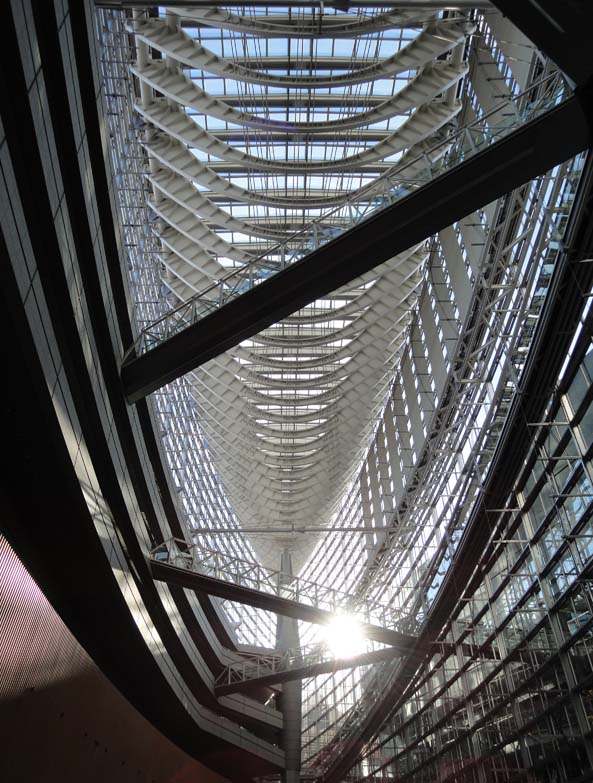
Designed by architect Rafael Viñoly, the light-filled lobby of Tokyo International Forum nods to the country's relationship with the sea, creating a floating hull-like structure.
Repeat after me "ton-kat-su"- three syllables of tender breaded pork cutlet sandwiches at Maisen in Harajuku.
A surprise view from one of the best eateries in the city - set within the deepest alleys of Roppongi lies the urban farm complex, Roppongi Nouen, founded by the formidable Hima Furuta - this is a must-see must-do, must-eat if you're in town - oishii
Grand Sumo at Ryōgoku was one of the most unique experiences of 2011.
Best people watching route: walk from Shibuya to Harajuka along sugoi Cat Street across Takeshita Dori and Omotesando Dori.

Kyoto e yōkoso (welcome to Kyoto)...

Heian Shrine Torii Gate in Kyoto.
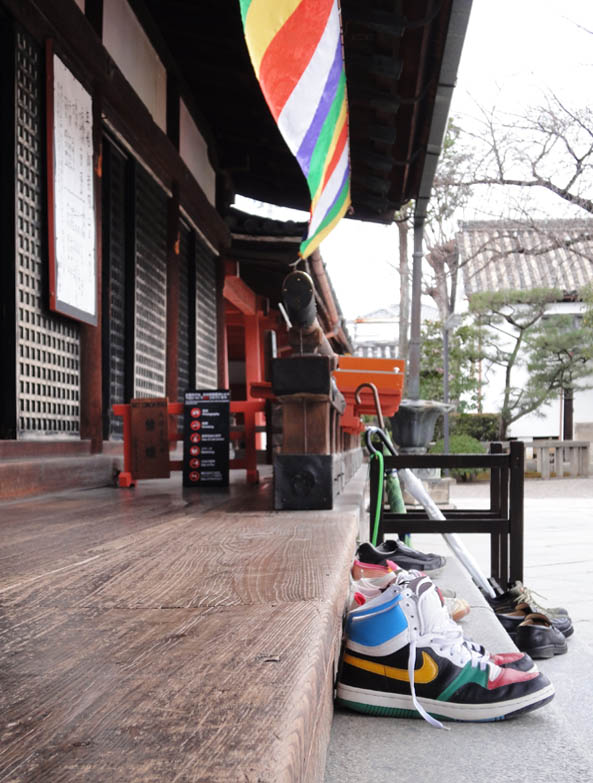
East meets West on the steps of the To-ji Temple compound.
Magnificence at Kinkaku-ji - Temple of the Golden Pavilion. 
I have worked on exciting projects and met interesting people this year – through this blog and my new-found embrace of Twitter I have made new friends and creative colleagues around the world and I look forward to working with and hearing their news and future successes in 2012.
Happy New Year everyone
Thank you for all your support - here's to another year!